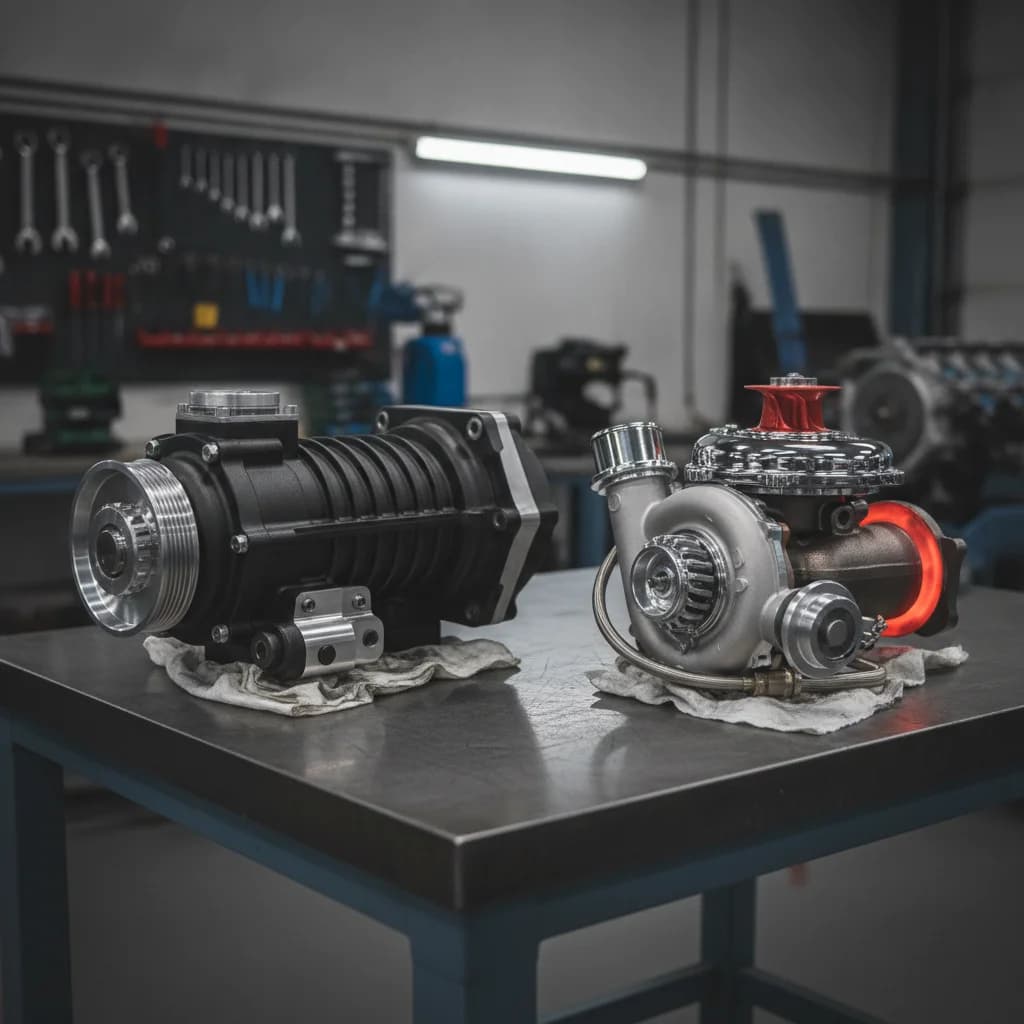
Choosing a shop matters more than choosing parts. The same supercharger kit can produce a car that starts cold, idles clean and pulls hard for years, or a car that lives on a trailer. The difference is almost never the box it came in.
If you are deciding where to take a build in the East Valley, here is what actually separates a performance shop from a parts installer.
Look for measurement, not claims
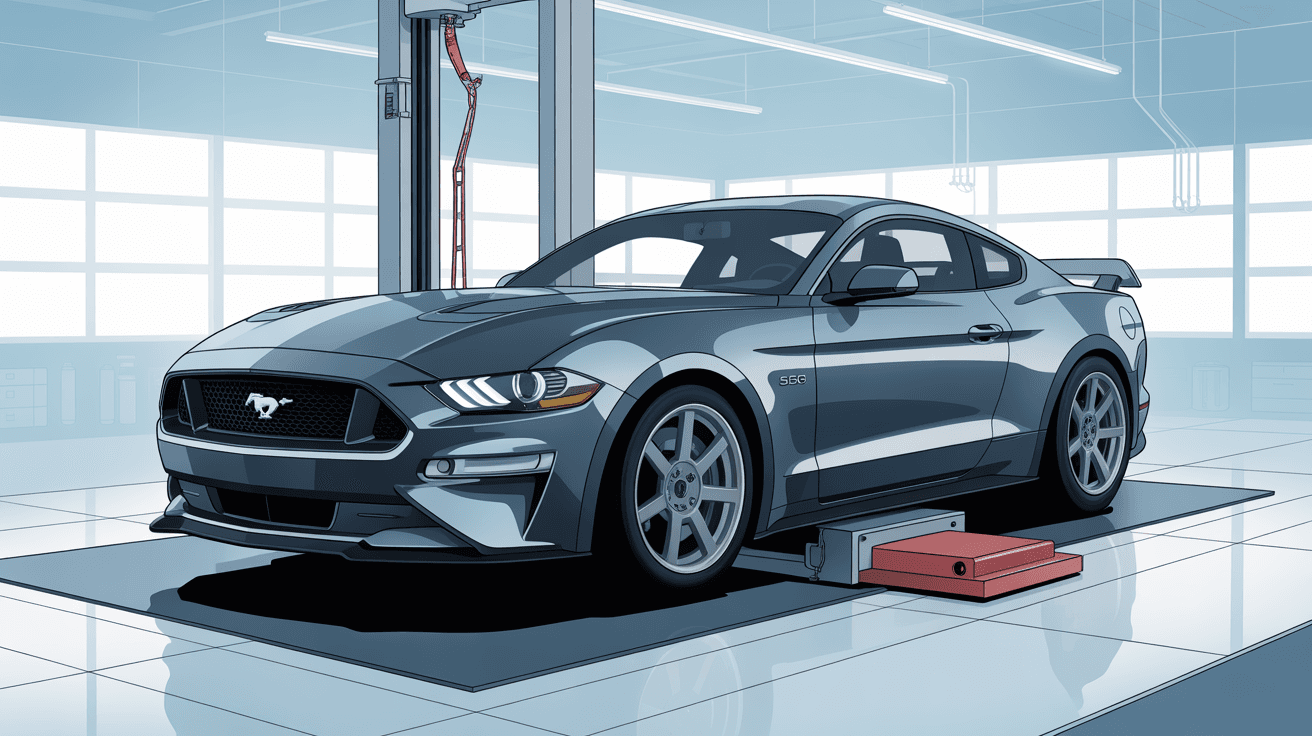
The single clearest signal is whether the shop can prove what it did. A dynamometer holds the engine under real load so the tuner can watch air/fuel ratio, timing and knock while making changes. Without that, a calibration is adjusted from street logs and the power number is an estimate.
Ask where tuning happens. Shops that send it out are working around someone else's calibration and someone else's schedule, and when something needs revisiting, your car waits.
At our shop every build is proven on an in-house Dynojet before pickup, and you leave with the sheet. That is not a marketing line, it is the only way to know a change helped.
Judge the scope, not the headline price
The most common way a build goes wrong is a quote that covers the headline part and quietly omits everything it depends on. A camshaft needs a valvetrain that survives it. Forced induction needs fuel and cooling. Long-tube headers need a calibration to capture the gain.
That supporting work does not vanish when it is left off a quote. It arrives later, usually after something has already failed. When you compare shops, compare what is included.
A good scope reads like a plan: here is the part, here is what it requires, here is why, and here is what the car will be like to drive when it is done.
Watch for the word "no"
A shop that agrees with everything is selling you parts. The useful ones will tell you when a combination does not make sense, when a part is wrong for your goals, or when your money is better spent elsewhere in the build order.
We would rather talk someone out of a part than install something that holds their combination back. That conversation costs us a sale and saves the customer a rebuild.
Look under the car
Fabrication and wiring are where corners get cut, because most customers never see them. Ask to look at a build in progress. Straight welds, supported harnesses, proper torque and clearances you can actually inspect are the difference between a car that holds up and one that develops mystery faults in eighteen months.
Ask who touches your car
On a performance build, the person planning the work, the person installing it and the person calibrating it all need to be talking to each other. In a small shop that happens naturally. In a large one it often does not, and the plan degrades as it passes through a service writer.
You should be able to talk to the people doing the work, and the answers should stay consistent from the first call to the final pull.
The questions worth asking
Before you hand over keys, ask:
- What supporting parts does this job need, and why?
- Who does the tuning, and is it done here?
- What happens if a part does not fit as expected?
- What will the car be like to drive when it is finished?
- What would you change about my current setup?
You are not testing anyone's knowledge. You are finding out whether they think about your car as a complete combination or as a list of parts to bolt on.
If you are in the East Valley
We are a performance and tuning shop at 22375 S Scotland Ct Suite 105 in Queen Creek, open Monday through Friday. We run an in-house Dynojet, calibrate with HP Tuners, handle Mopar ECU unlocking in house, and do our own fabrication and engine work, so a build does not have to bounce between shops.
Plenty of our customers drive in from Gilbert, Mesa, Chandler and San Tan Valley, and we tune remotely for people further out. Call (602) 762-4916, tell us the car and where you want to end up, and we will give you a straight answer about whether we are the right shop for it.