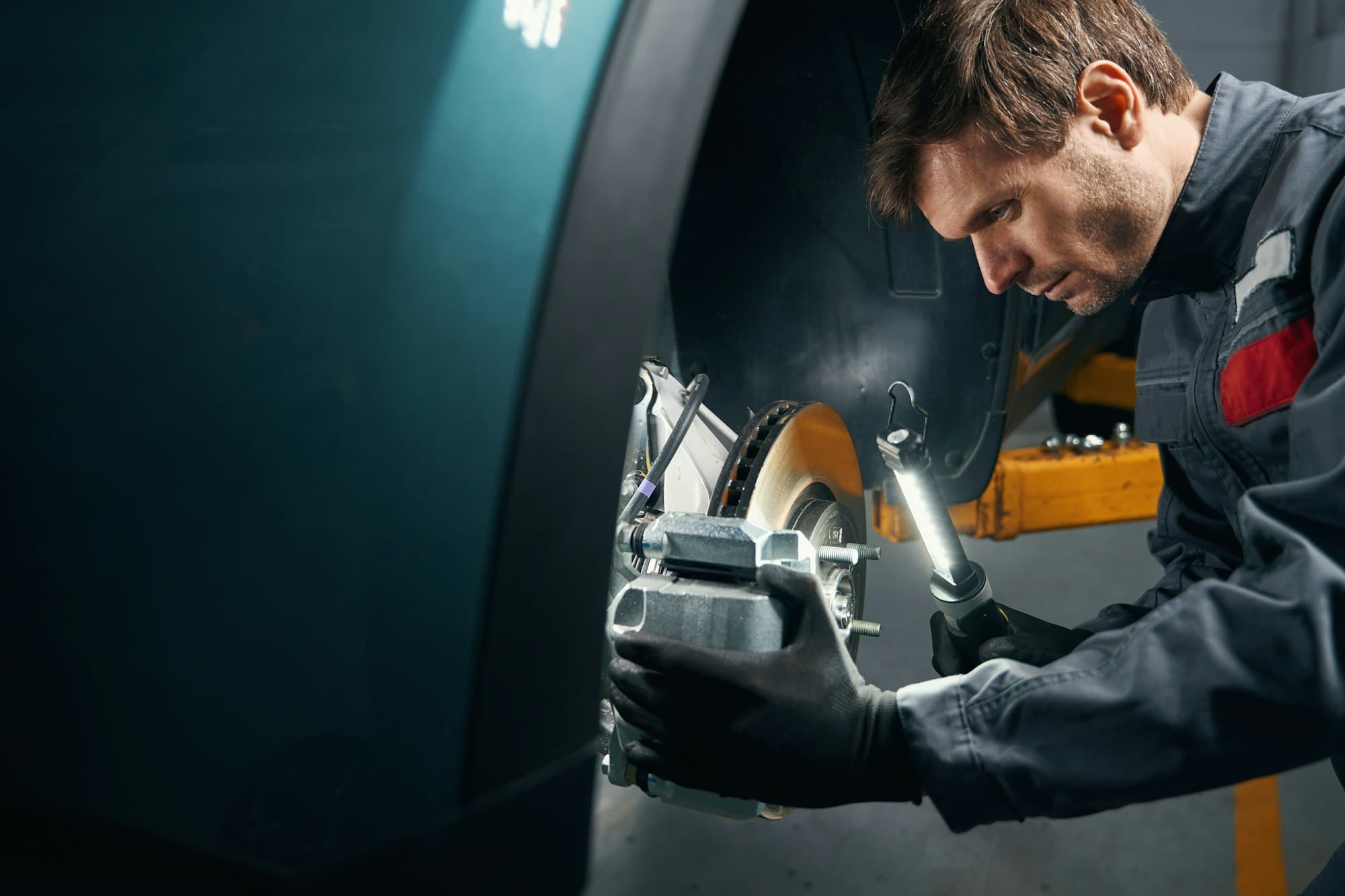
When it comes to vehicle maintenance, there's one system that should never be overlooked: the brakes. Your car's brakes are not just another component: they are your first and most important line of defense. And here's the part enthusiasts forget: the faster you make a car, the more your brakes have to do. Adding power without addressing braking is one of the most common mistakes in the performance world.
Why brakes matter more than any other upgrade
Every bit of speed you add has to be scrubbed off again, and it's the brakes that turn all that kinetic energy into heat and bring you back down. On the street that means safety margin in an emergency stop. On the track it means the difference between a car that's confidence-inspiring and one that fades to the floor after a few hard laps. Big power with stock brakes is a car that goes fast in a straight line and gets scary everywhere else.
Warning signs you shouldn't ignore
Brakes almost always tell you they need attention before they fail. Watch (and listen) for:
- Squealing or grinding: wear indicators or metal-on-metal contact
- A pulsing or vibrating pedal under braking: often warped or unevenly worn rotors
- A soft, spongy, or sinking pedal: possible air or moisture in the fluid
- Longer stopping distances or the car pulling to one side
- A burning smell after hard stops: overheated pads or a dragging caliper
A brake pedal that feels different is never “nothing.” It's the one system where waiting to find out is genuinely dangerous.
Pads, rotors, and fluid: the fundamentals
A healthy brake system is a matched set. Pads provide the friction and wear out on purpose: they're the sacrificial part. Rotors are the surface the pads grip; they get resurfaced or replaced as they wear or warp. And brake fluid, the part everyone forgets, absorbs moisture over time, which lowers its boiling point and gives you that soft pedal under hard use. Fresh, high-quality fluid is one of the cheapest brake upgrades there is.
When a performance brake upgrade is worth it
If you've added power, tow, run track days, or just want more confident stops, a big brake kit (larger rotors, multi-piston calipers, and performance pads) gives you more clamping force and, crucially, more heat capacity so the brakes resist fade. Paired with high-temp fluid and the right pad compound for how you drive, it transforms how the car feels every time you touch the pedal.
Keep them healthy
Have your brakes inspected regularly, address the warning signs early, and don't let a fast car outrun its stopping power. Whether you need routine pad and rotor service or a full big-brake upgrade to match a build, getting the braking right is the smartest performance money you'll spend.